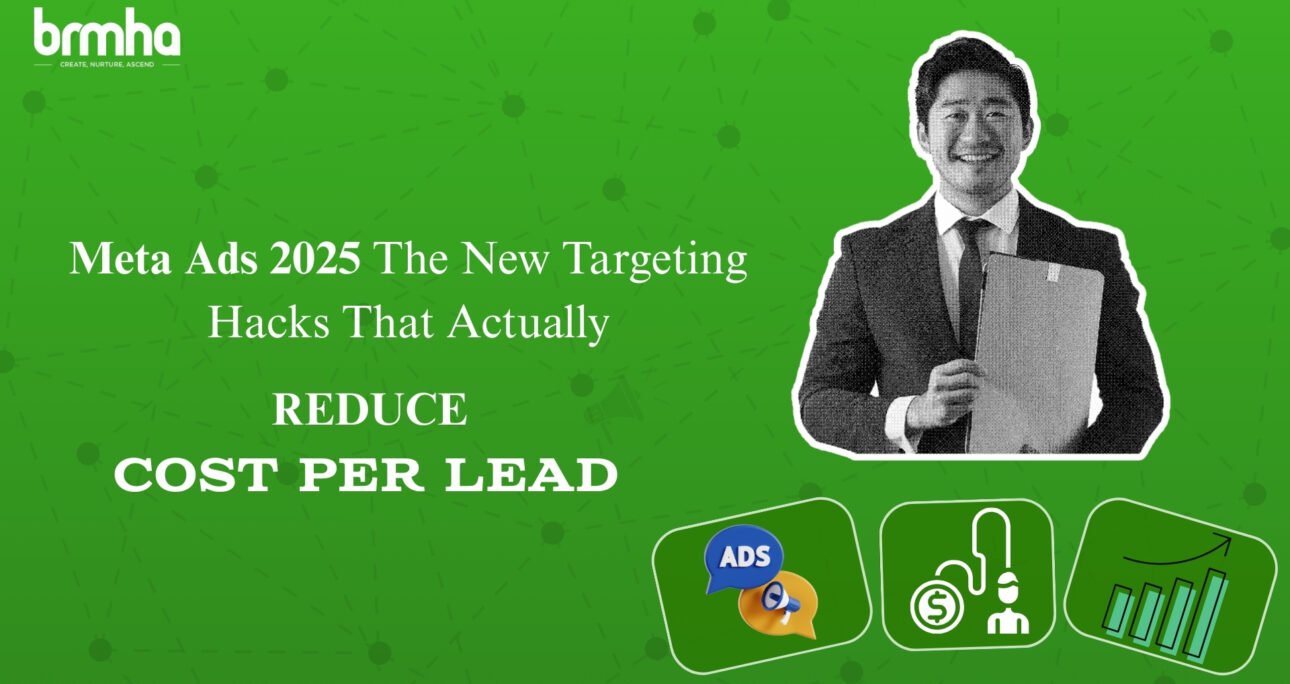
Meta Ads in 2025 feels like stepping into a brand-new world. The platform is smarter, more automated, and surprisingly more cost-effective, but only for advertisers who know how to use it the right way. Many businesses still struggle with high lead costs, unstable performance, and ads that burn out too quickly. The truth is simple: the strategies that worked a few years ago just don’t hit the mark anymore. What works now is sharper audience targeting, stronger creative intent, and a tighter match between what you show and what users want.
This breakdown walks you through the targeting methods that top marketers use today to bring down their cost per lead (CPL) while maintaining quality. Everything here is practical, field-tested, and tuned for results.
The Big Shift in 2025: Meta Ads Favors Signal-Rich Accounts
Before diving into hacks, it’s helpful to understand how Meta’s algorithm thinks in 2025. The platform now prioritises “signal-rich” advertisers, meaning accounts that feed it high-quality data. If your pixel is set up correctly, your conversions are tracked properly, and your creatives send the right signals, Meta rewards you with lower CPL.
Think of it this way: the clearer the signals, the cheaper the leads.
This is why every successful strategy begins with two basics:
• Make sure conversion tracking is complete (Pixel + CAPI).
• Give each ad set at least 3–5 days to learn before making changes.
Once the system understands your signals, the real targeting power switches on.
Hack 1: Broad Targeting + High-Intent Creatives
It may sound odd, but broad targeting is one of the most effective ways to lower CPL right now. Meta’s AI has become extremely good at identifying potential customers without relying on a long list of interests.
The trick is letting the creative qualify the user. Use high-intent content such as:
• Testimonials
• Before-and-after visuals
• Strong benefit-driven headlines
• Simple carousels with “Swipe to learn more”
When paired with broad targeting, these creatives act like a magnet that pulls in the right people. Many campaigns see a 20–40% drop in CPL using this method.
Hack 2: Use Advantage+ Audience, But Guide It with Behavior Filters
Advantage+ is one of Meta’s strongest tools in 2025. What used to feel unpredictable has become a powerful targeting option if you guide it the right way.
The key is not restricting it with interests but guiding it through behavior filters, such as:
• People who engage with your industry’s pages, not only your page
• Users who recently purchased or added products to cart across Meta’s platforms
These subtle filters help the algorithm focus on warmer pockets of users, even inside a broad audience.
Hack 3: Retarget by Funnel Stage, Not Time
Traditional retargeting is based on days: 7, 14, or 30. That approach doesn’t perform well anymore.
In 2025, the winning method is stage-based retargeting, which looks at what users did, not when they did it. Examples include:
• People who visited your landing page but didn’t scroll much
• Users who clicked your CTA but didn’t begin form fill
• People who started your form but abandoned it
• Instagram engagers from the last 90 days
This lets you deliver messages that match their mindset:
• Light education for shallow visitors
• Strong CTAs for form abandoners
• Social proof for IG engagers
When people see the right message at the right moment, CPL naturally falls.
Hack 4: Build AI-Powered Lookalikes Using Zero-Party Data
Zero-party data the info people willingly share has become a secret weapon. When used to create lookalike audiences, it makes Meta’s targeting extremely sharp.
You can collect zero-party data through:
• Quizzes
• WhatsApp questions
• Surveys
• Lead forms that ask about goals or problems
Once collected, group your data into clusters such as:
• Pain points
• Budget levels
• Intent levels
These clusters produce lookalikes that behave much closer to real buyers. Many advertisers see CPL drop by 25–60% after switching to zero-party-based lookalikes.
Hack 5: Turn Off Ads During “Bad Hours”
One underrated change in 2025 is deeper control over hourly scheduling. Most industries have hours where leads are costly and engagement is low.
For example:
• Real estate leads get expensive after 10 PM
• Health & wellness performs poorly early morning
• E-commerce leads are cheapest between 12 PM and 4 PM
By identifying and cutting out these “bad hours,” you reduce wasted spend instantly. Avoiding just 3–5 weak hours per day can lower CPL by 10–25%.
Bonus Tip: Use Multiple Formats to Guide Users Through a Mini Funnel
People consume content differently on different surfaces. A single ad format is no longer enough.
The winning combo right now is:
• Reels to attract attention
• Feed ads to drive clicks
• Story lead forms to convert instantly
When users move through these formats, friction drops and so does CPL.
Conclusion
Success on Meta Ads this year isn’t about shortcuts. It’s about using accurate signals, understanding behavior, and aligning with current digital marketing trends. The advertisers who combine broad targeting, smart segmentation, better creative intent, and data-driven scheduling are the ones getting cheaper, high-quality leads.
Meta will keep evolving, but the marketers who adapt quickly will always stay ahead of the curve.